


Precision Window Tinting Chicago - Chicago Window Film, Home Window Tinting, Commercial Window Tinting
Get an estimate today!  
Home Offers Window Film Styles About Us Benefits of Window Film Contact Us FAQ
 
Precision Window Tinting Chicago
Estimates are FREE. Enter your zipcode.

Can Window Film Be Removed?

In a word, yes – window film can be removed. Typically removal would consist of first peeling off the polyester layer – exposing the adhesive, wetting down the adhesive with soapy water then scraping off the softened glue. On most windows this is merely a time consuming process and if you only have one or two windows to do, you can complete the project yourself.

But, if you have a large project or are unaware if your windows are tempered, we don’t recommend that you attempt removal on your own. Not only is window film removal labor intensive and messy, but the normal method of razor blade removal might damage the glass if your windows are tempered.

What’s the problem? Well, for around the last 5 years quality control in some tempered glass manufacturing has taken a fall. We don’t know why the glass isn’t made as good as is used to be, but we can still explain what the problem is.

The process of manufacturing a piece of tempered glass is as follows:

  1. Glass is cut to size
  2. Edges are ground smooth
  3. Fabricating debris is washed away
  4. Glass is introduced to high heat followed by a blast of cool air.

It is step 3 – the washing away of the fabricating debris – that is the most important step when producing a piece of glass that can stand up to traditional cleaning and film removal techniques; and in recent years this step has not been given the attention it deserves.

The thing is, if there is any fabricating debris left on the glass before it is heated and cooled(tempered), that material will fuse to the surface of the glass. To the untrained eye, this debris cannot be seen and the glass will appear normal. This is the main reason so many pieces of sub-standard glass have made it into new construction – most people don’t know that there is anything wrong with the glass.

If it can’t be seen, what’s the problem? Well, a poorly cleaned tempered unit is a lot like a piece of fine-grit sandpaper. The paper backing being the glass, the sand being the fabricating debris, and the fusing of the debris to the glass being mimicked by the glue on the sandpaper.

Traditionally the window film is scraped off by razor blade, but if the glass is sub-standard this process will knock loose fabricating debris which will scratch the surface of the glass as it is dragged across the unit.

It is the ability to identify which units will require precautions and treat them accordingly that separates window film installers from experienced window film installers. Believe it or not, only a fraction of window film installation companies are even aware that there can be an issue with tempered glass film removal – so we still urge you to be careful when contracting a company to do the work for you!

If you know, or for that matter do not know if your glass is tempered, seek professional assistance before attempting to remove the film yourself.

What Is A Good Window Tint Brand?

We specialize in architectural window tinting in Chicago. So you know which products we are comparing to one another: We’ve worked with Huper Optik Ceramic & Spectrally-Selective Films, 3M Prestige, Madico, Sunscape, V-Kool, Solargard, Panorama, Llumar, Hanita Tek, Decolite, SunTek, Solyx, Graffiti-Gard & Graffiti-Free products.

Because no one company manufactures the best of every type of film, we’re going to go over the different types of architectural energy films available and then let you know which products we have found to be the best of the best. The three architectural film types are traditional, ceramic, and spectrally-selective.

All traditional architectural window films are semi-metallic. This composition provides high heat rejection, high visible light transmission and low heat absorption.

Heat rejection is the key difference between ceramic window films and traditional window films. Ceramic window films reduce heat primarily through absorption, not rejection.

High heat absorption can cause non-tempered glass to break and can also cause damage to insulated glass (IG) units, causing them to trap moisture and mold over time. For this reason, the best heat rejection of a ceramic film that can be safely applied to most architectural glass maxes out at 56%. The single benefit to ceramic window film over traditional film is slightly less reflectivity. Since this is the only quantifiable benefit to ceramics and the risk to the glass is so high, we never recommend ceramics to our clients, but rather suggest a spectrally-selective film.

Besides, most traditional architectural window films are only around 5%-10% more reflective than standard insulated glass, and can block the same amount of heat as the safest ceramic film gradient. Consider this before paying 50%-100% more for the film that is only slightly less reflective.

If you need to use a ceramic film,  Huper-Optik ceramics are the best we have worked with. They have no distortion and have the lowest reflection available in a ceramic film.

Now if you are looking for a reliable, cost-effective and high performance traditional window film – Madico films deliver. The longest US manufacturer of window films, Madico films have the best distortion free adhesives and polyester substrate of any traditional film we have worked with. Styles come in neutral, gray, silver and bronze. Films that are typically installed to vertical glass (not skylights) max out at around 25% visible light reflectance, a small price to pay for nearly 75% solar heat rejection.

Finally we get to spectrally selective films. These films add no reflectivity to the glass and up the ante by not darkening the window either! The popular “70” series from each manufacturer refers to the percentage of visible light transmitted through the film.

The 30% visible light reduction is nearly undetectable to the human eye. These films are safer than ceramic films because they reject heat in addition to absorbing it, causing less stress on the glass. This level of technology makes the films expensive, about 100%-200% more than traditional films.

If you want the best performing, distortion free, highest visible light transmitting film,  go with V-Kool 70. V-Kool pioneered spectrally-selective window film and has been manufacturing it for nearly 20 years. No other manufacturer sells a spectrally-selective film that can surpass its performance – period.

To recap what is the best window tinting film for architectural application:

  • Best traditional films: Madico
  • Best ceramic films: Huper Optik
  • Best spectrally-selective film: V-Kool

Now that you know what the best films are, what is the best window tinting film for your specific application?

The most common issue we deal with is condo and building association regulations concerning changing the outside appearance of the windows. You can make a direct comparison between each of the three film styles we have discussed, and there are even three styles of traditional film that can be used without being noticable.

Since the nominal heat rejection of V-Kool 70 and Huper Optik Ceramic 40 is around 56%, we can compare these to three of Madico’s film styles – neutral, gray and bronze, which have gradients that also reject the same amount of heat.

Unless you are located on the ground floor of the building and there’s an overhang, none of these films will change the look of the glass to the point where anyone will care. These films are relatively light in color and don’t reflect enough light to be noticable without standing directly in front of the glass.

Home Window Tinting

Home window tinting is one of  the best values in home energy savings today. Much like replacing your incandescent bulbs with compact fluorescents, the investment in home window tinting pays you back in energy savings from the very first day you have it installed.

Home window tinting lets in plenty of light, blocks between 50%-80% of solar heat  and will last longer than any other home improvement you can make.

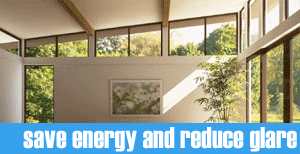
Saving on cooling costs is just the beginning. Home window tinting blocks over 99% of harmful UV light and reduces glare – protecting your carpet, flooring, furniture, pianos and artwork from fading. Thousand of dollars of your hard earned money goes into the furnishings in your home – keep them looking like new and help your home hold its value.

Do your research! So many people (even “experts”) are unaware of what low-e windows actually do. They are designed to keep heat in your home, not out. They are not specifically designed to block UV light (usually a maximum of 60% blocked) and do not reduce glare. Home window tinting is the solution to all of these shortcomings.


home | offers | films | about us | benefits of film | blog | contact | faq
VKool  Madico